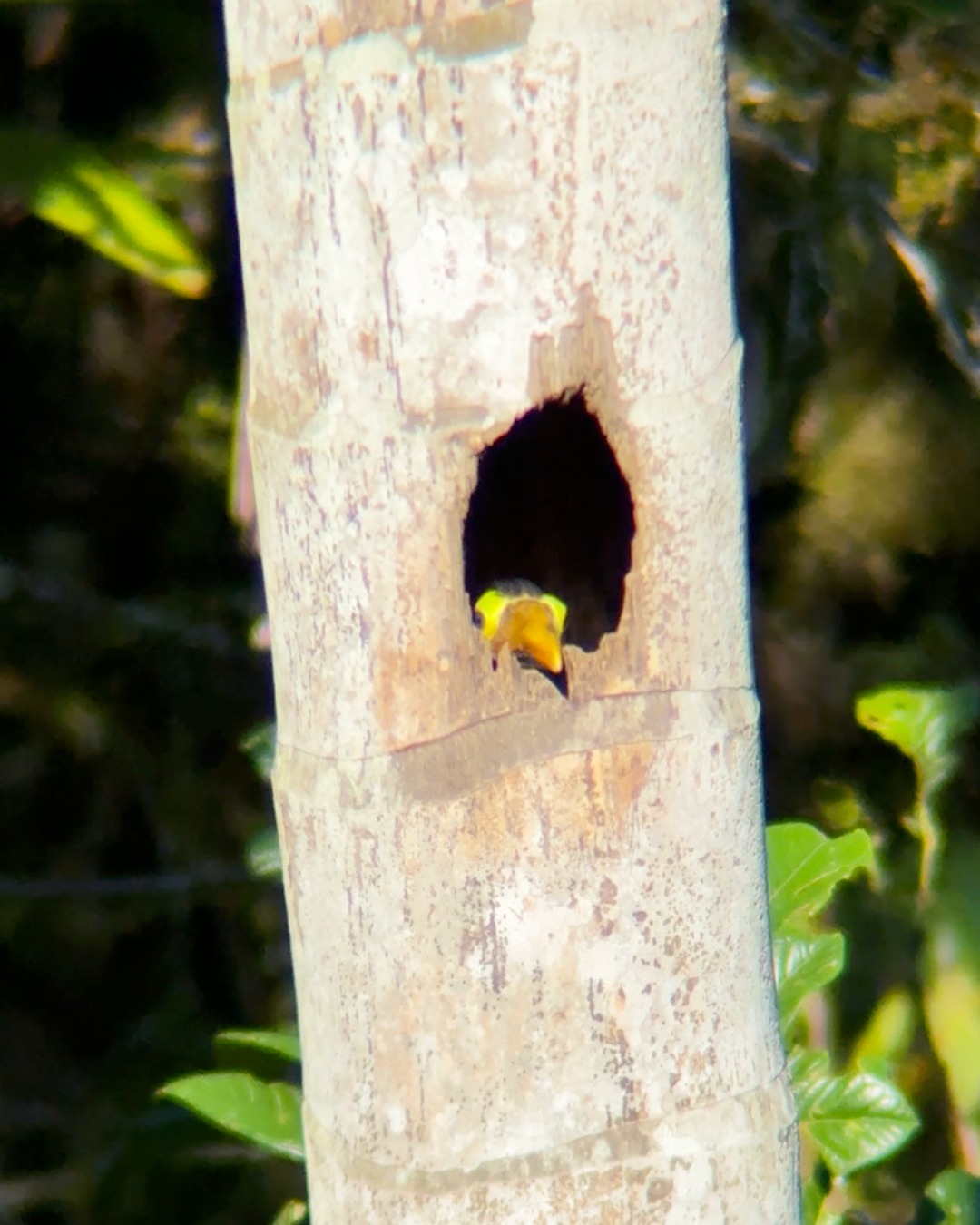
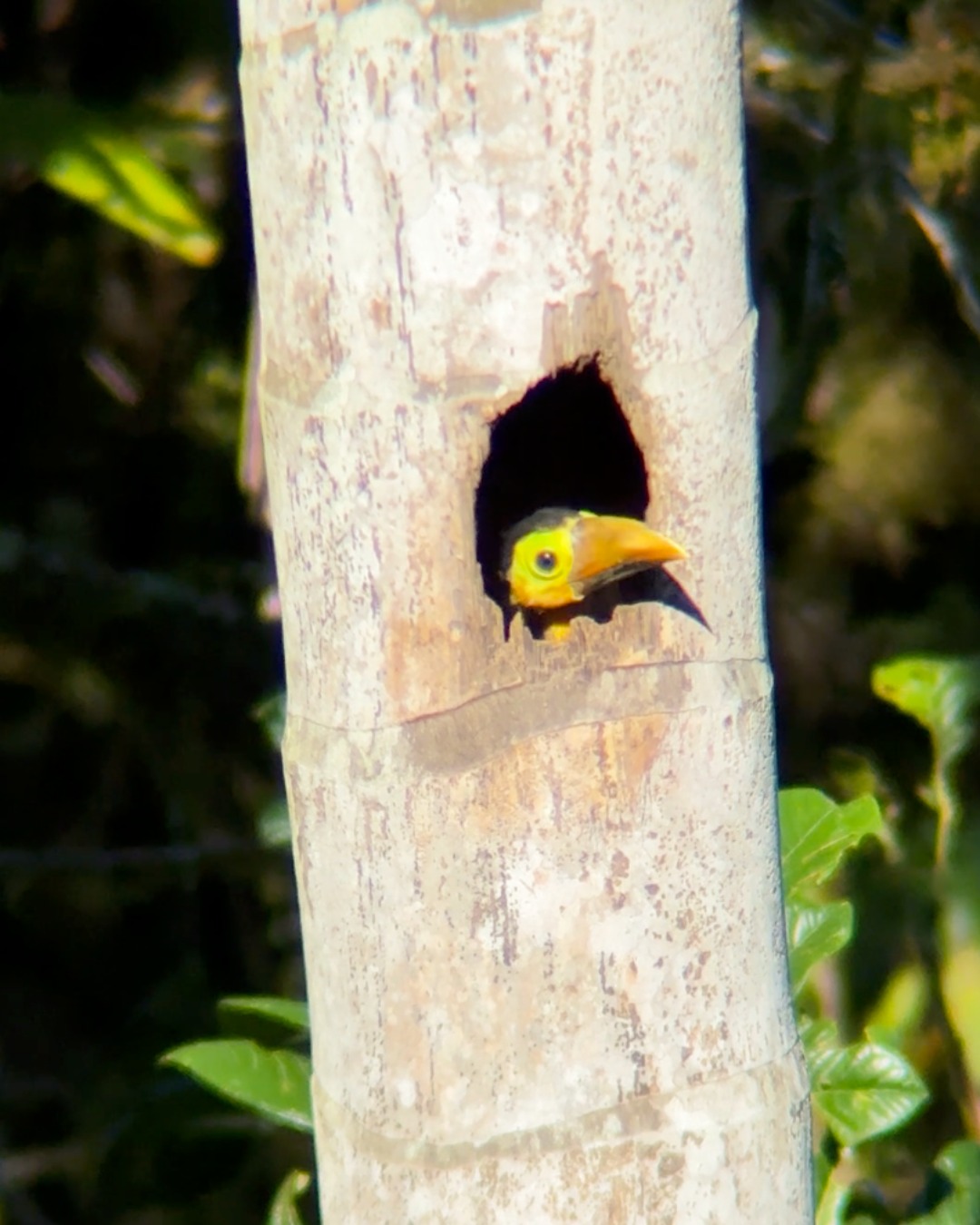
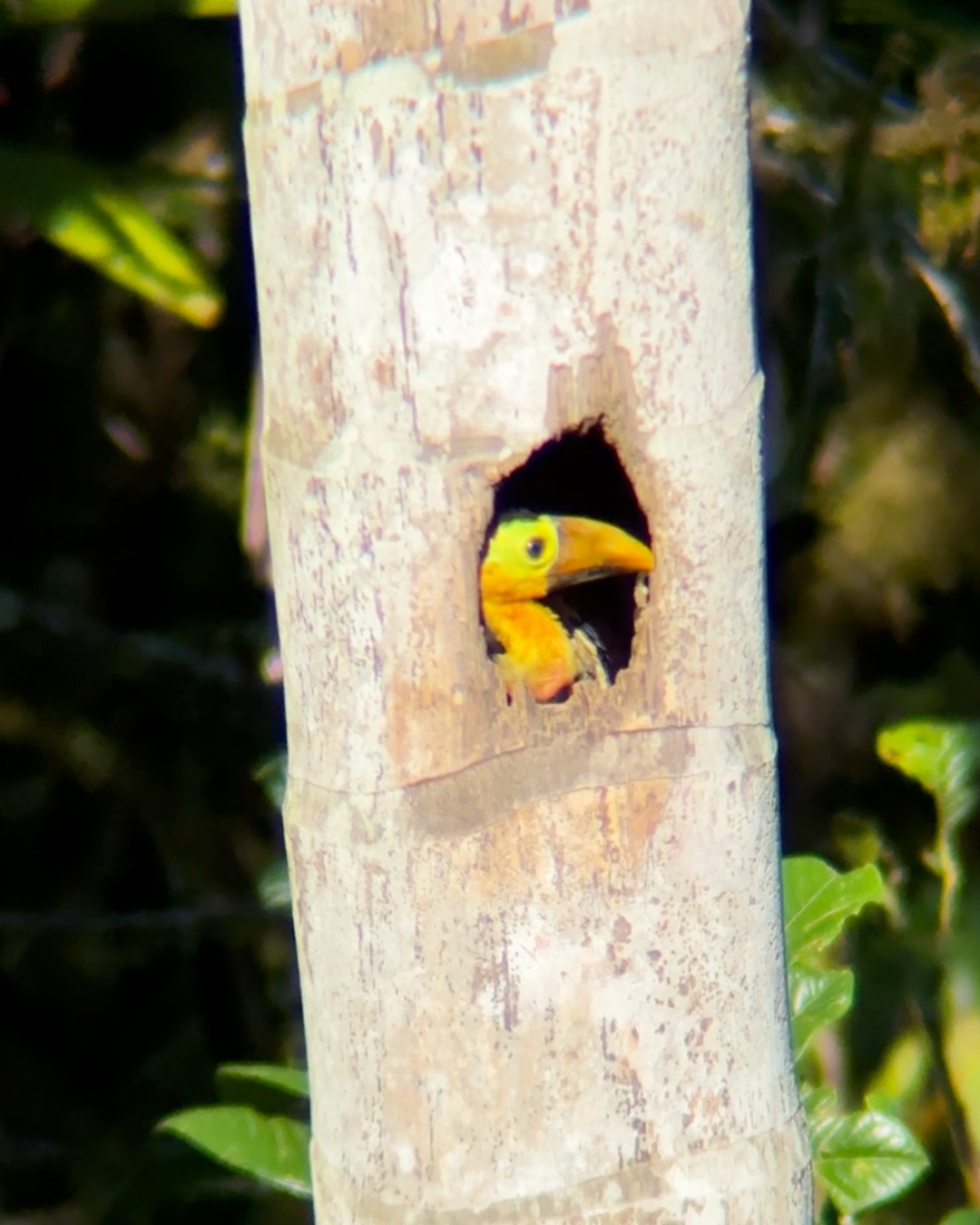
Choco Toucan
Ramphastos brevis. Species-specific wild nesting data are limited. It is a cavity nester, but a precise Mindo egg count, incubation period and reliable local breeding window should not be inferred from other large toucans.
Open the Choco Toucan guide
Yellow-throated Toucan
Ramphastos ambiguus. Breeding has been reported from December to May in Ecuador. Two or three eggs are often reported, but detailed incubation and fledging information remains incomplete.
Open the Yellow-throated Toucan guide
Pale-mandibled Aracari
Pteroglossus erythropygius. A western Ecuador field study documented at least two eggs, approximately 17 days of incubation and at least 44 days of nestling care, shared by the pair and at least one helper.
Open the Pale-mandibled Aracari guide
Crimson-rumped Toucanet
Aulacorhynchus haematopygus. Accounts indicate nesting can begin late in the year in Ecuador and continue into the first part of the next year. Many precise clutch and development figures come from captive birds, so they are not a Mindo calendar.
Open the Crimson-rumped Toucanet guide
Plate-billed Mountain Toucan
Andigena laminirostris. Regional accounts describe two or three eggs, roughly 16 days of incubation and about 46–60 days to leave the nest. Timing varies geographically; Mindo observations should be logged separately.
Open the Plate-billed Mountain Toucan guide
What this means for a visitor
The five species occupy different elevations and habitats. A broad annual window does not mean an active nest will be accessible or appropriate to visit on a particular day.
Review Mindo birding seasons