Mindo Cloud Forest Species Guide

Golden-headed Quetzal in Mindo, Ecuador

The Golden-headed Quetzal is one of the most elegant cloud forest birds visitors can hope for around Mindo and northwest Ecuador. It is a strong target for birders, photographers, and travelers planning a private route instead of a generic nature walk.

This guide connects the species facts with the practical next step: where it fits in a Mindo route, when a local guide helps, what affects your chances, and which tour format gives you enough flexibility.

Cloud forest target Fruiting-tree searches Photography potential Private guide recommended
Quick answer

Can you see Golden-headed Quetzal in Mindo?

Yes. The Golden-headed Quetzal (Pharomachrus auriceps) is a realistic target in the broader Mindo and Chocó-Andean cloud forest region, but it should be treated as a route-and-conditions bird, not a guaranteed stop. Your chances improve when you start early, choose the right elevation and forest edge, watch fruiting activity, and let a local guide adapt the plan.

Listen to the Golden-headed Quetzal

Learning its voice can help you detect this quiet cloud-forest bird before it becomes visible.

Bird call

Hear a Golden-headed Quetzal recording

Open the original recording on Xeno-canto for identification practice. In the forest, keep playback limited and follow your guide’s ethical-birding judgment.

Listen on Xeno-canto

Recording: Barry Edmonston · Xeno-canto XC1001823 · CC BY-NC-SA 4.0

Golden-headed Quetzal: Video and Photos

A field Short and three portrait images, presented in the same approved 9:16 media-card pattern used across the site.

Field video from MindoSee the bird’s shape, color and cloud forest setting in a 59-second vertical clip.
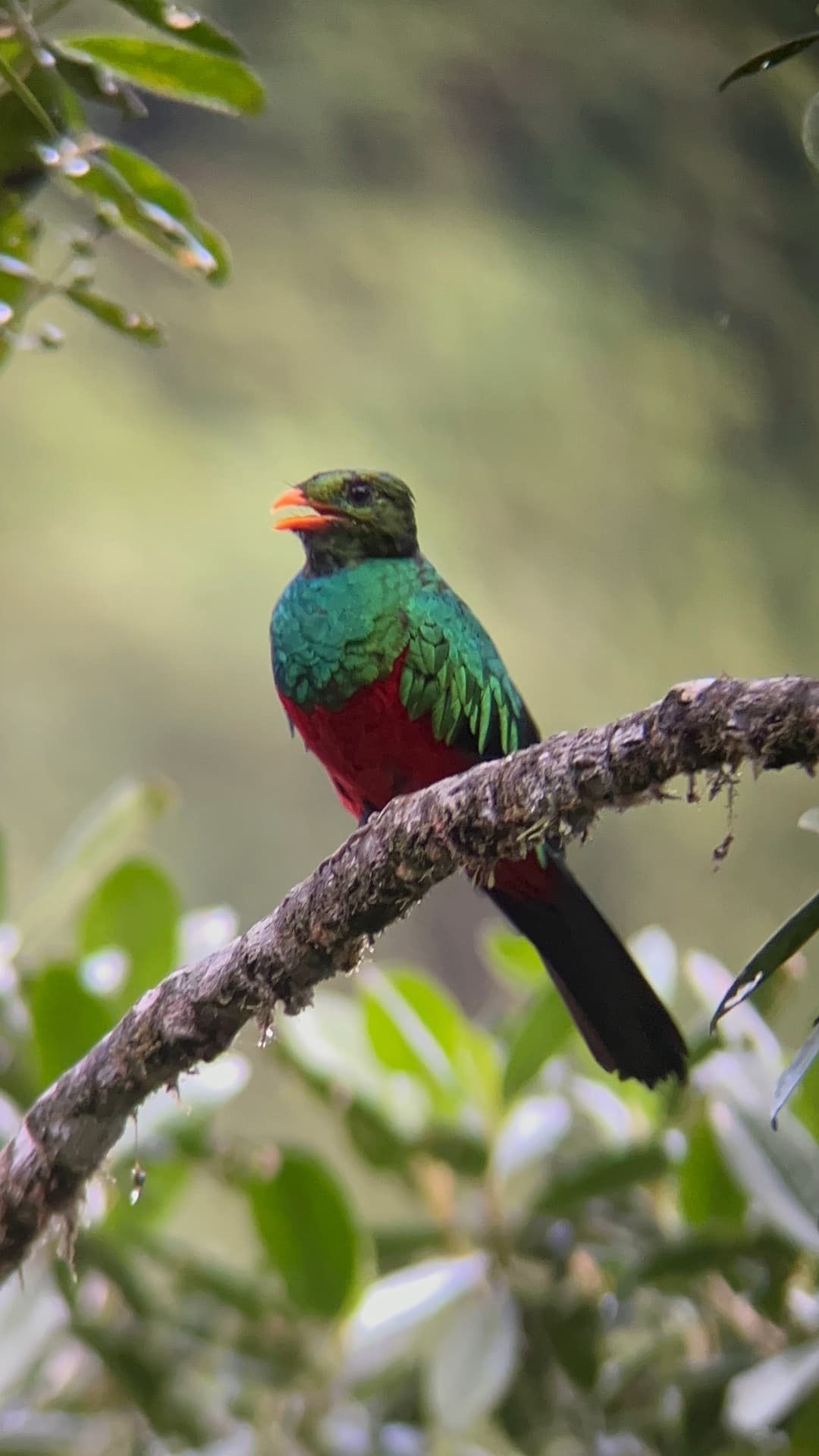
Golden-headed Quetzal perched in the cloud forest near Mindo, Ecuador
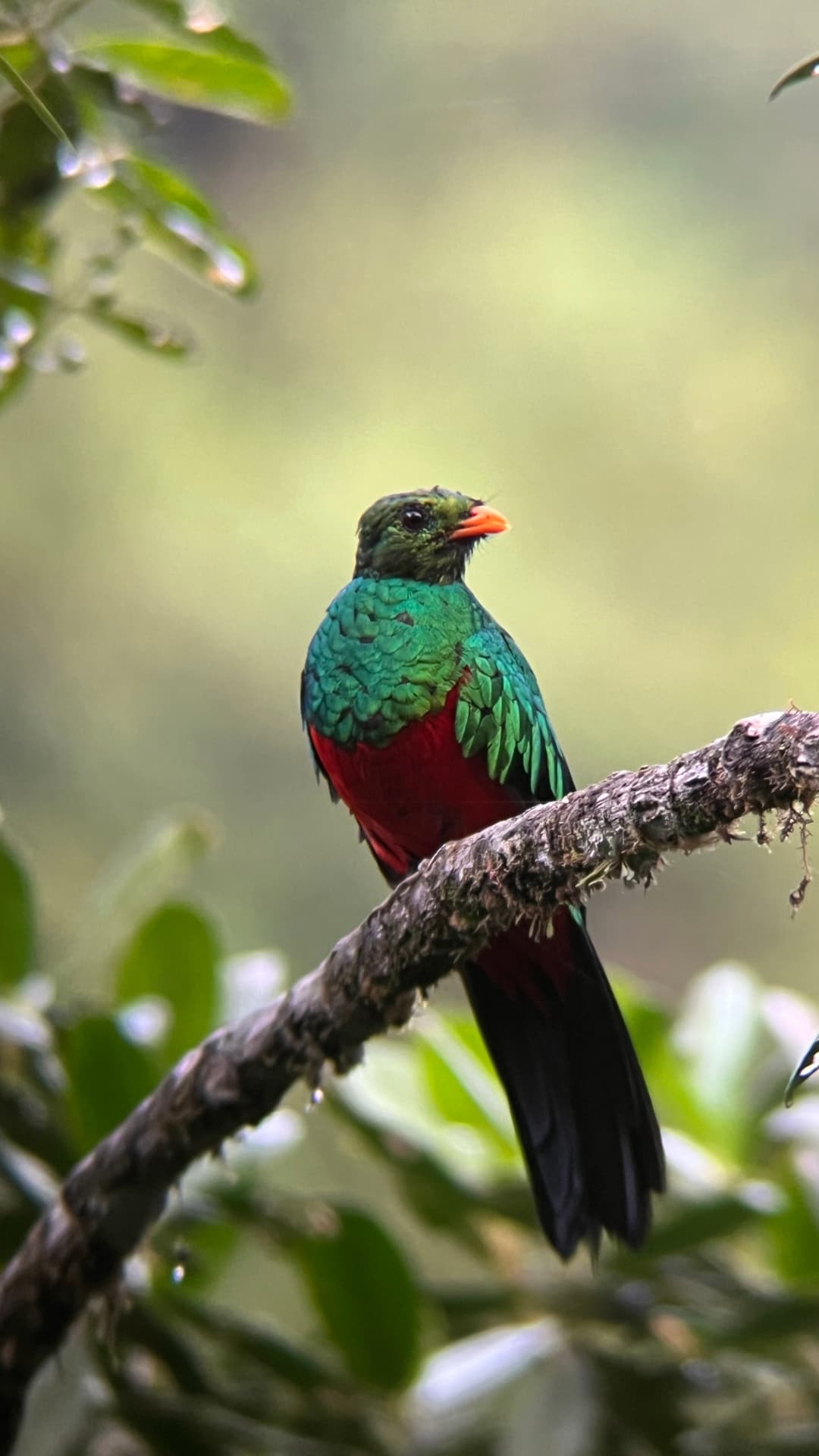
Golden-headed Quetzal showing its emerald upperparts and vivid red belly
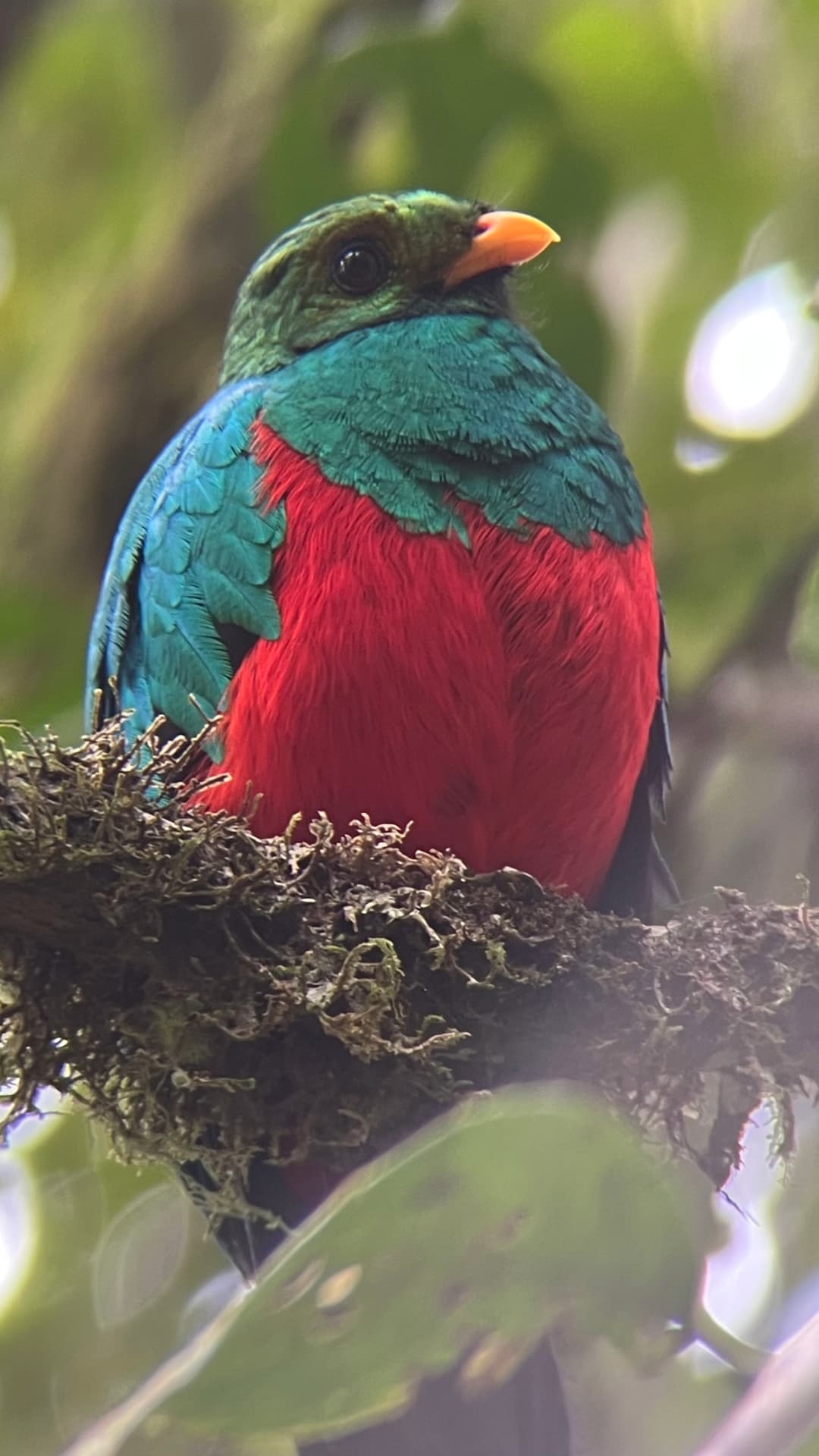
Golden-headed Quetzal photographed on a forest perch in northwest Ecuador
Three-image field galleryPortrait framing preserves the full bird and gives every slide the same visual height.

Why the Golden-headed Quetzal Matters

A strong species page should help visitors understand the bird and the trip decision.

Signature cloud forest bird

Its shape, colors, and forest setting make it one of the birds that turns Mindo into a serious birding destination.

Best with flexible timing

Quetzal searches work better when the route can adjust around fruiting trees, weather, and recent activity.

Photography needs patience

Clean backgrounds, distance, light, and perch angle matter. Rushing through stops usually weakens photo chances.

Pairs with other targets

The same morning can also support toucans, tanagers, barbets, and other cloud forest birds if the route is planned well.

How to Look for Golden-headed Quetzal

Use this as a practical field plan, not a fixed checklist.

Start with habitat and elevation

Look for productive cloud forest habitat, quiet edges, and fruiting trees rather than trying to cover too many unrelated locations.

Move slowly and listen

Quetzals can be easy to miss. Patient scanning and quiet movement often beat a fast itinerary.

Use recent local knowledge

A local guide can shift the route toward current activity and avoid spending the morning in low-probability places.

Plan enough time

If this species is important, a custom route or full-day plan gives more room for adjustment than a rushed short visit.

Private Guide or Self-Guided Search?

Choose the approach based on how important this bird is to your trip.

Self-guided can work if...

You are comfortable birding independently, have flexible time, and are happy treating any sighting as a bonus rather than the main goal.

Choose a private guide if...

You have limited time, want photography help, need target-bird strategy, or want to combine quetzal searches with toucans, tanagers, and other Mindo specialties.

Best Route and Tour Matches

Eight same-language next steps connect species research to a realistic itinerary.

From Quito to Quetzal Habitat

A flexible route matters more than a single promised stop.

1. Quito to Mindo

Plan an early departure toward northwest Pichincha so the best bird activity is not lost in transit.

2. Confirm conditions

Meet the guide in Mindo and review weather, recent activity, fruiting trees and suitable elevation.

3. Search quietly

Scan productive forest edges and canopy perches slowly, using calls and movement without crowding the bird.

4. Broaden the route

Continue with toucans, barbets, tanagers and hummingbirds if the quetzal remains quiet.

Birds You May Encounter on the Same Route

The exact mix changes by elevation, habitat, season and current food sources.

Plate-billed Mountain Toucan

A major Chocó-Andean target on suitable higher-elevation cloud forest routes.

Toucan Barbet

A colorful forest bird that may overlap with productive edges and mixed bird activity.

Tanagers

Mixed flocks can add strong color and variety while the guide watches for quetzal movement.

Hummingbirds

Flowering edges, gardens and feeder stops can complement a broader cloud forest day.

Practical Planning Checklist

The details that improve route decisions without implying a guaranteed sighting.

Season and probability

Possible year-round, but fruiting activity, rain, fog, wind and recent records can change the odds from day to day.

Departure and duration

Start early. Choose a full day when this is a priority; use a half day for a focused introduction.

Difficulty and equipment

Expect easy-to-moderate walking depending on route. Bring binoculars, rain protection and camera gear you can carry comfortably.

Guide recommendation

A private local guide is strongly recommended for current activity, call recognition, elevation choices and ethical positioning.

Golden-headed Quetzal FAQs

Concise answers for birders planning a Mindo visit.

Can you see the Golden-headed Quetzal in Mindo?

Yes. It is a possible cloud forest target around Mindo and northwest Ecuador, but sightings depend on route, elevation, fruiting activity, weather, and the amount of time available.

Do I need a guide to look for Golden-headed Quetzal?

A guide is strongly recommended when this species is a priority because local route choice, recent activity, quiet scanning, and timing can make a major difference.

Is Golden-headed Quetzal good for photography?

It can be excellent when light, distance, perch position, and bird behavior cooperate. A flexible private route gives photographers a better chance to wait and adjust.

Which tour is best for this species?

A custom private birding tour or a full-day route is usually the best fit because the guide can adapt habitat, pace, and timing around current conditions.

Plan with a local guide

Want to look for the Golden-headed Quetzal?

Tell us your dates, birding level, target species, photography goals, and available time. We will recommend the most realistic Mindo route for this bird and related cloud forest targets.

What happens next

  1. Share your dates and target birds.
  2. We check route options and recent conditions.
  3. We suggest a realistic private plan.
  4. You confirm the best next step for booking.