Start before sunrise
The first calls and strongest activity often happen early. Being in position before the forest gets bright is more important than rushing in late.
Field guide to a Mindo lek
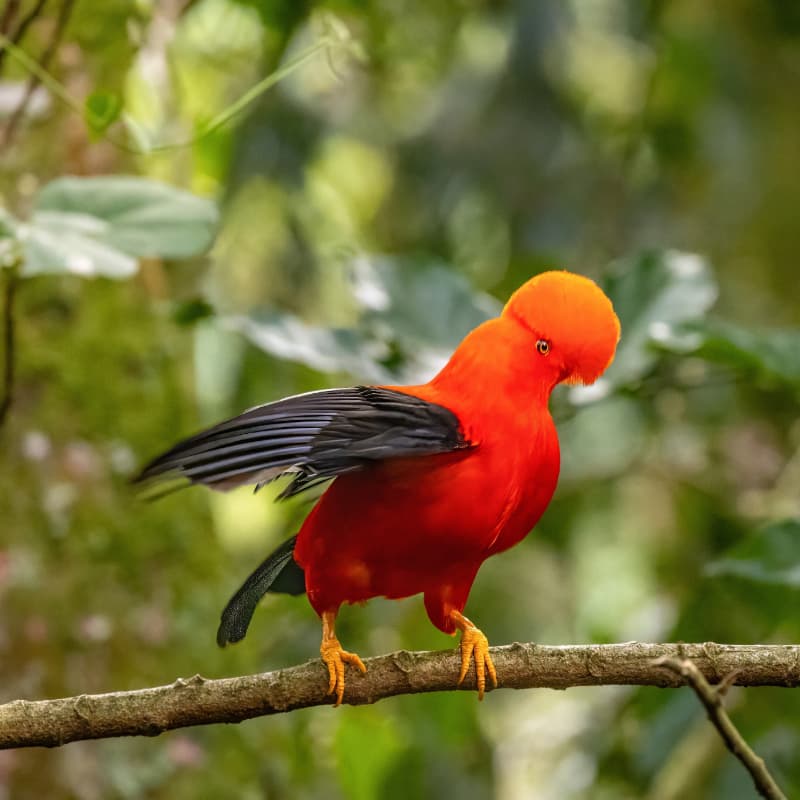
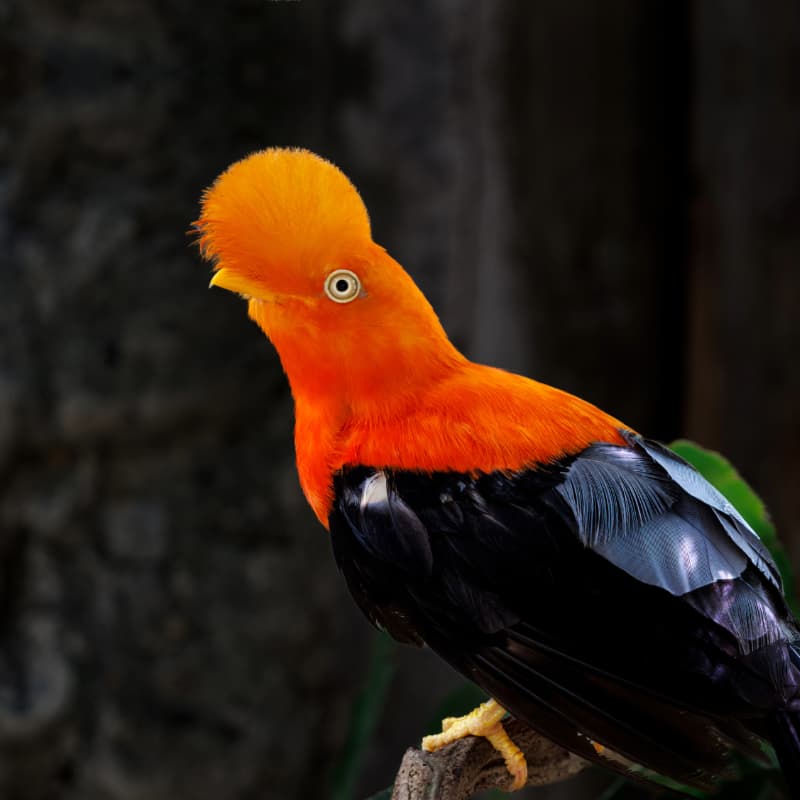
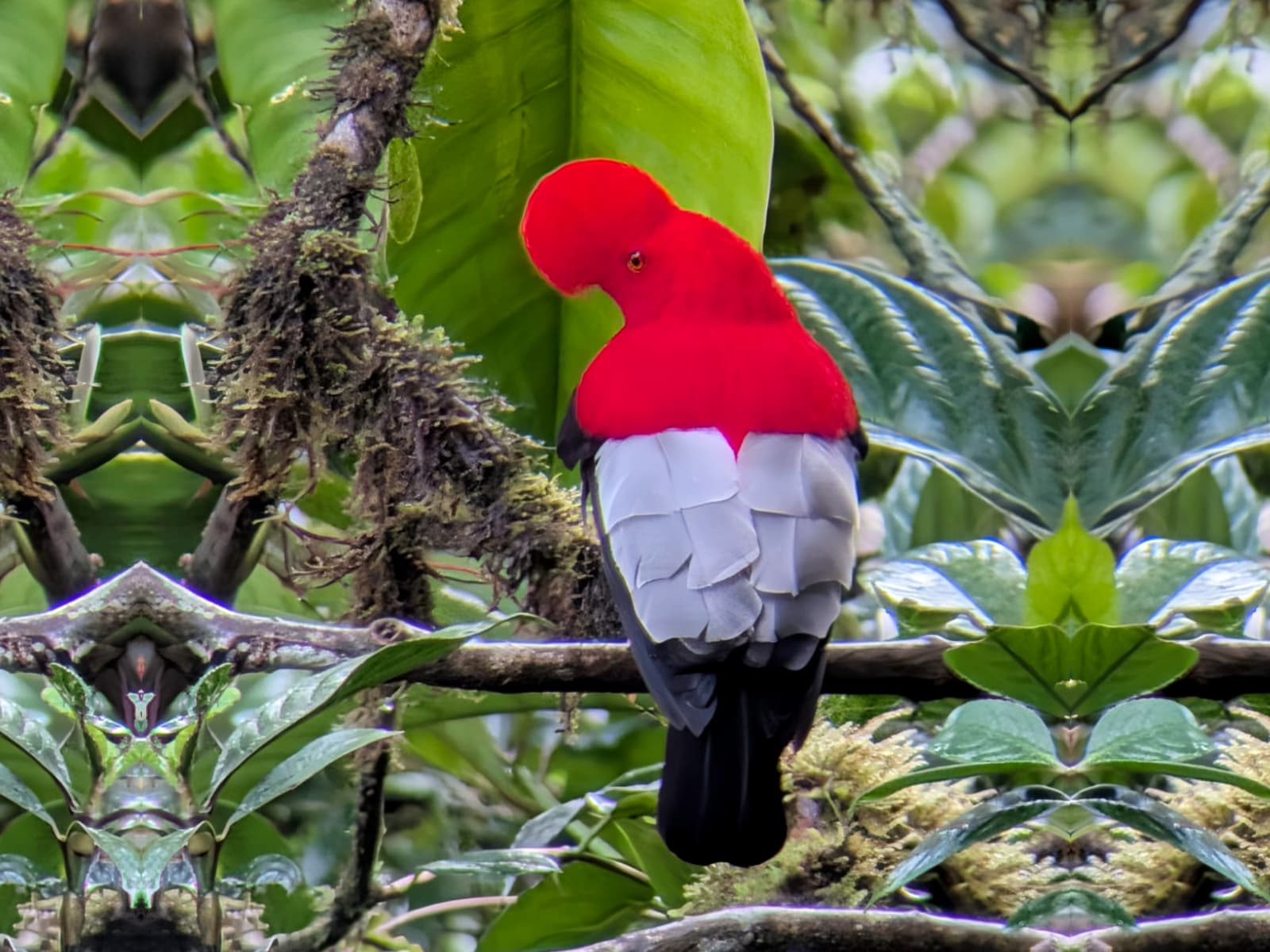
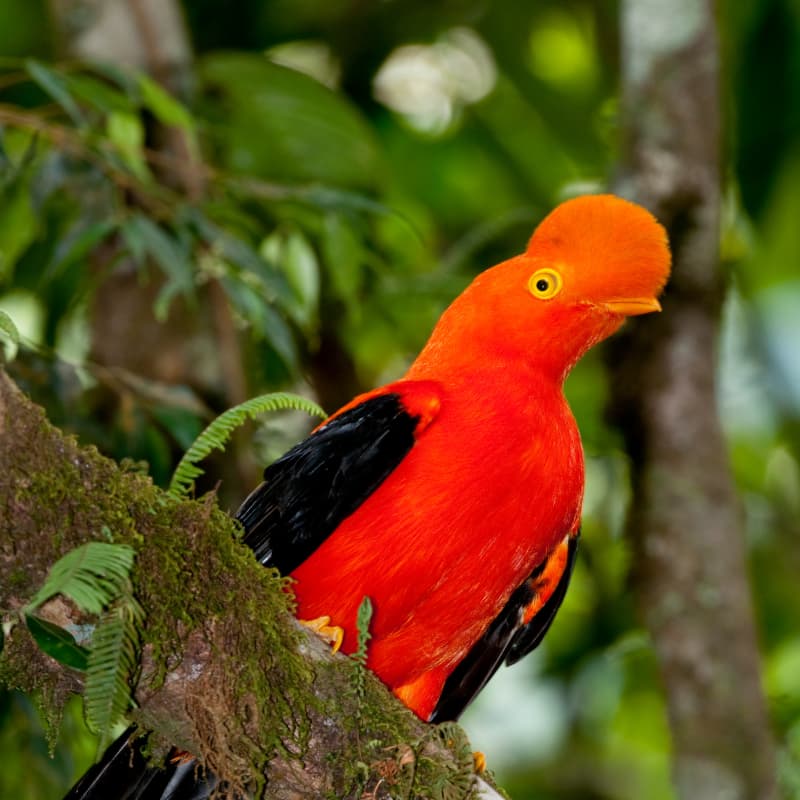
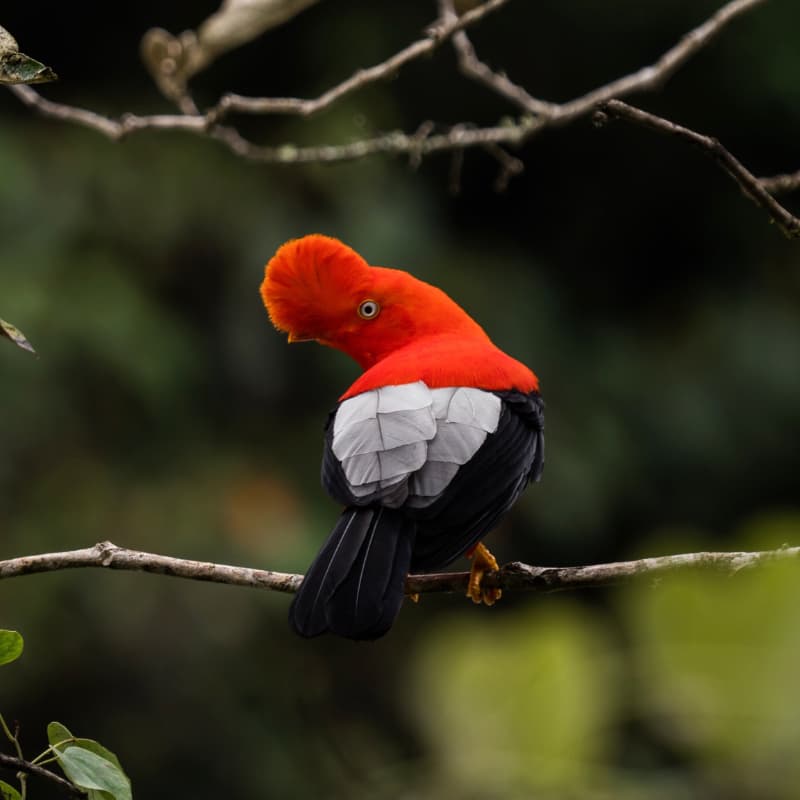
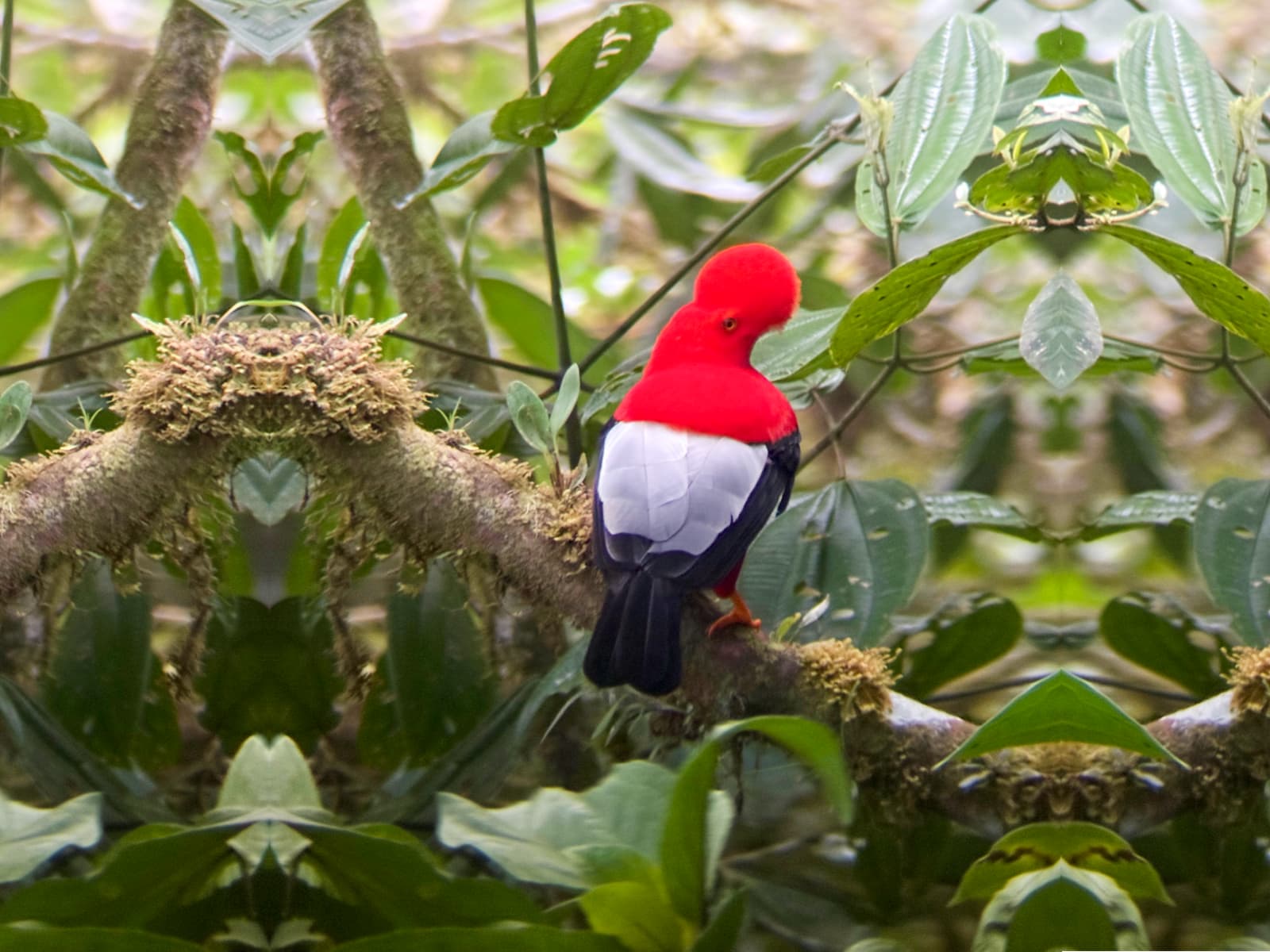
The Andean Cock-of-the-Rock is one of Mindo's most dramatic cloud forest birds. This guide explains what a lek is, when the display is strongest, what you may see, and how to plan a respectful morning around this target bird.
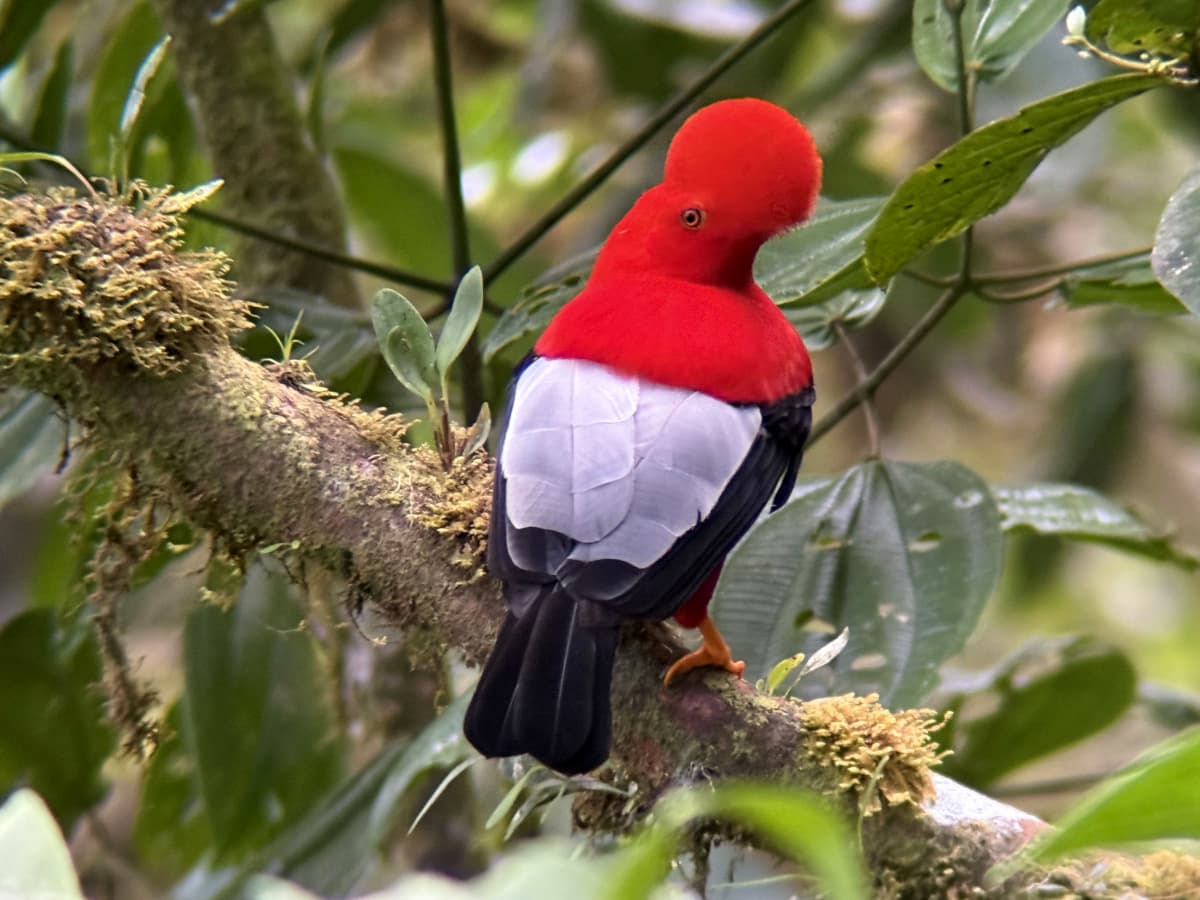
A Cock-of-the-Rock lek is a traditional display area where several males gather before and after sunrise to call, posture, hop, chase, and compete for female attention. In Mindo, the best experience usually comes from arriving quietly before first light with a local guide who knows the active viewing area.
Use time, weather, and quiet access together.
The first calls and strongest activity often happen early. Being in position before the forest gets bright is more important than rushing in late.
Light mist can be fine, but heavy rain, wind, or disturbance may reduce display intensity or shorten the viewing window.
Leks are traditional locations. Local route knowledge helps you reach a suitable viewing position without disturbing the birds.
A lek is not a feeding stop. It is a courtship arena. Males use sound, color, posture, and short bursts of movement to compete. The action can feel sudden, so patience and quiet observation matter.
Five field moments, plus the focused dawn tour option.
Best for travelers who want a real target-bird plan, not just a quick stop.
Plan pickup and travel time so you are near the viewing area before activity begins.
Dark or neutral layers, quiet shoes, and rain protection are better than bright or noisy gear.
Low light and forest cover make binoculars more useful than relying only on a phone or camera.
Stay on the guide's line, avoid flash, avoid playback, and do not push closer for a photo.
Choose based on time, birding level, and photography goals.
A dawn-focused route for travelers who want the lek behavior as the main target and still have time for other cloud forest birds.
View Tour DetailsBest for a bigger full-day route that combines dawn lek timing with toucans and other cloud forest targets.
See Full-Day RouteShort answers for planning respectfully.
Activity can be regular at known sites, but intensity changes with weather, season, disturbance, and local conditions.
Arrive before sunrise or before the first calls. Late arrival often means missing the strongest part of the display.
Yes, but it is low light and sensitive. Use no flash, move quietly, and keep enough distance from the display area.
A guide is strongly recommended because the sites are sensitive and timing, access, and viewing position matter.
Want the best chance of seeing the display?
Share your dates, birding level, photography goals, and available time. We can recommend the most realistic dawn route for the Cock-of-the-Rock display and nearby cloud forest birds.