Pharomachrus auriceps is a recognizable cloud forest species with a golden-bronze head in adult males. In northwest Ecuador, it is an important target around suitable forest in the wider Mindo region.
ECUADOR QUETZAL GUIDE
Quetzals of Ecuador: Species, Cloud Forest Habitat and Where to See Them
Ecuador’s quetzals belong to the genus Pharomachrus and are associated mainly with humid montane forest. Golden-headed and Crested Quetzals are the principal species travelers plan around, but distribution, elevation, fruiting trees, weather, and recent activity determine the route. Mindo provides practical access to Chocó Andino cloud forest from Quito.
Ecuador habitatsRepresentative speciesMindo & Chocó AndinoEthical viewing
Which quetzal species live in Ecuador, and where are travelers most likely to encounter them?
Ecuador has Golden-headed and Crested Quetzals in humid Andean and Chocó cloud forest. Travelers may look for Golden-headed Quetzals around the wider Mindo region, while Crested Quetzals generally favor suitable montane forest at different elevations and locations. Fruiting trees, quiet early hours, weather, and flexible habitat-based routes improve opportunities, but sightings cannot be guaranteed.
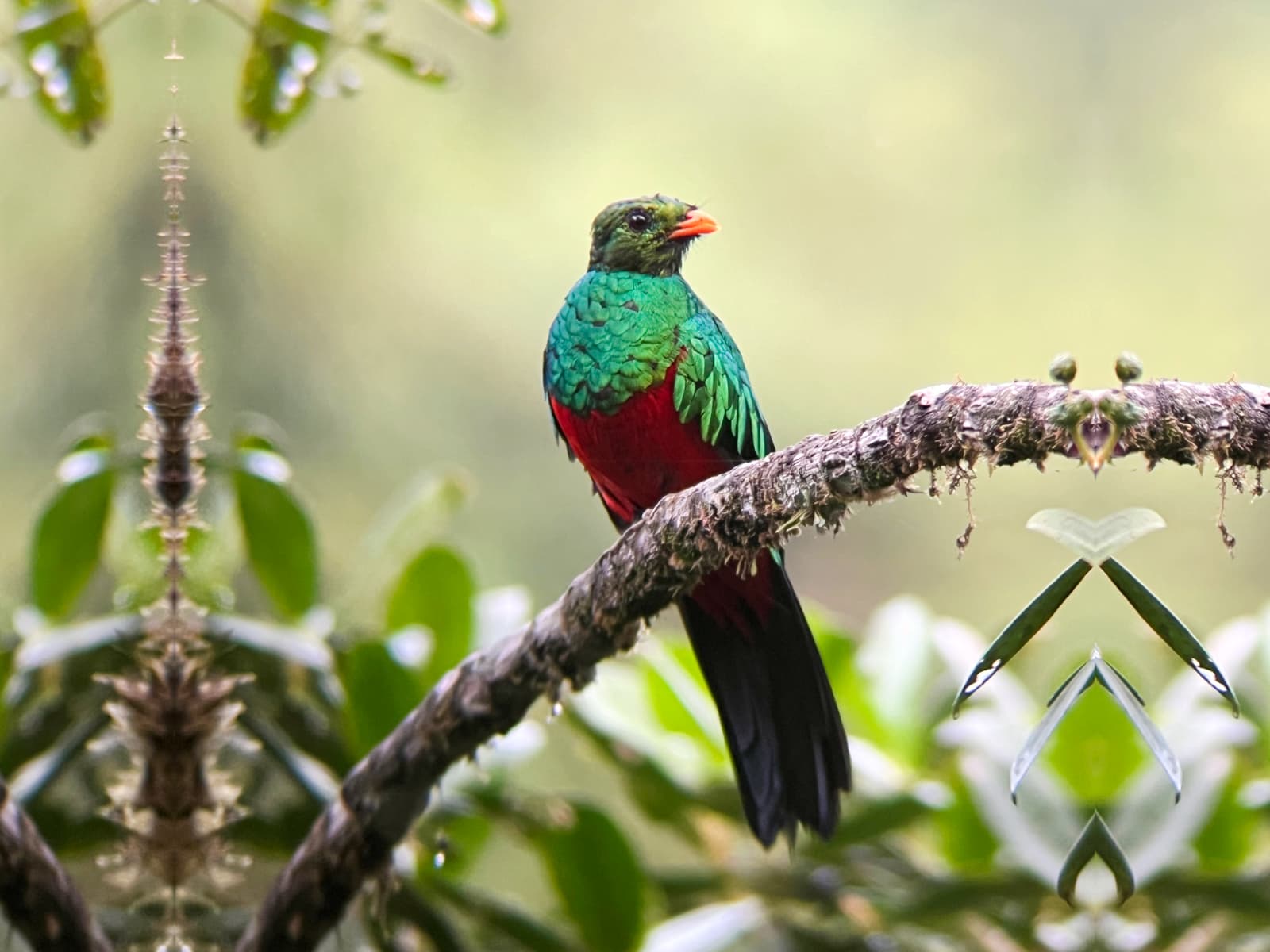
Golden-headed QuetzalCloud forest, fruiting trees, elevation, patient listening, and realistic route planning
Quetzal species of Ecuador
This national overview is broader than a single-species profile. Taxonomy and local distribution should be checked with current field references, while route decisions should emphasize habitat and elevation.
Pharomachrus antisianus is another Ecuador quetzal associated with humid montane forest. Its distribution and elevation differ, so it should not be treated as interchangeable with the Golden-headed Quetzal.
Sexes differ in plumage, and light under dense canopy can alter perceived color. Identification should combine shape, head pattern, tail, voice, behavior, and location rather than color alone.
Ecuador also has several trogons. Quetzals and trogons share a family, but field identification requires attention to proportions, plumage, tail shape, voice, habitat, and elevation.
Cloud forest habitat and elevation
Quetzals depend on forest structure and food resources. A good plan searches suitable habitat rather than treating one famous viewpoint as a guaranteed location.
Quetzals use mature and recovering forest where canopy structure, fruiting plants, nesting cavities, and connected habitat support feeding and movement.
A difference of several hundred meters can change temperature, tree communities, mist, fruit, and bird assemblages. Share the desired species before choosing a reserve or road.
Quiet edges, gaps, and roads may open useful views into the canopy, but heavy disturbance reduces habitat quality. Productive viewing balances visibility with intact forest.
Northwest Ecuador’s Chocó Andino connects exceptional cloud forest habitats near Quito. Mindo is a practical base, while exact routes extend across different reserves and elevations.
Fruiting trees, season, and timing
Quetzals eat fruit and may move widely as resources change. Calendar month alone is less useful than combining recent activity, food, weather, and habitat.
Avocado relatives and other forest fruits can concentrate activity temporarily. A tree productive last week may be quiet later, so local information can improve route choice.
Cooler mornings often provide more vocal activity and comfortable field conditions. Starting early also leaves time to change elevation if the first habitat is quiet.
Cloud forest weather can hide the canopy or soften light. Short rain may be followed by renewed activity, while persistent fog can justify moving or waiting.
Quetzals occur year-round in suitable habitat, but natural movement, breeding, food, weather, and access vary. Plan flexibly instead of relying on a single “best” date.
Where to look near Mindo
Mindo works as a route-planning base rather than one exact quetzal spot. Access, recent reports, road conditions, elevation, and the group’s available time shape the day.
Forested routes around the wider Río Nambillo landscape can provide quetzal habitat. Trail choice should reflect current access, walking ability, rain, and recent activity.
Quiet forest roads can offer canopy views and easier pacing than steep trails. They remain working roads, so guides must manage vehicles, safe stopping, and ethical distance.
Managed reserves may protect habitat and maintain access, but entrance arrangements and opening times vary. Confirm fees and permissions before departure.
A full-day or custom route can change elevation and habitat when quetzals are a priority. Transport time must be included so the itinerary remains realistic.
How quetzals fit an Ecuador birding itinerary
A national quetzal plan should account for the rest of the journey. Quito arrival, Mindo access, highland extensions, available days, and other target birds determine whether one focused route or several regions make sense.
Mindo and northwest Ecuador are practical from Quito, but early bird activity still requires an early departure or overnight stay. Airport arrival time, traffic, pickup location, and sleep should be included before promising a dawn route.
Mindo combines lodging, guides, forest roads, reserves, gardens, and several elevations. It works well for travelers who want quetzals within a broader route that may also include toucans, tanagers, hummingbirds, and mixed flocks.
Crested Quetzal planning may involve different Andean locations, elevations, and logistics. Do not compress distant sites into a Mindo day simply because both species occur in Ecuador; travel time can reduce useful field hours.
A half-day favors one nearby habitat, a full day allows elevation changes, and a multi-day itinerary creates more flexibility for weather and natural movement. More time improves options, not certainty.
A practical quetzal route checklist
Targeted birding works best when expectations and logistics are clear before the guide selects the route.
State whether Golden-headed, Crested, or any quetzal is the goal. The route, elevation, time, and likelihood differ.
Quetzals may sit silently or move behind foliage. Limit conversation, scan fruiting trees patiently, and listen before walking farther.
Binoculars are essential; a spotting scope can help at canopy distance. Protect equipment from rain and carry a lens cloth in humid forest.
If activity is low, a good route can include toucans, tanagers, mixed flocks, hummingbirds, habitat photography, and other cloud forest targets.
Photography and ethical expectations
Quetzals are striking subjects, but forest light and bird behavior make photography uncertain. The welfare of the bird and habitat takes priority over the image.
Dense canopy, mist, and backlighting can require higher ISO, slower shutter choices, or exposure compensation. A monopod may help where permitted.
Maintain distance and avoid surrounding, flushing, or repeatedly following a bird. Longer lenses and patient positioning are safer than pushing through vegetation.
Repeated sound can disrupt behavior, especially near territories or nests. Follow guide and reserve rules and never let a recording replace ethical judgment.
Do not publish sensitive nest locations, clear branches, use flash at a cavity, or remain when adults show stress. A missed photograph is better than disturbance.
Private guide or self-guided quetzal search?
Choose the level of support that fits your targets, time, transport, and identification experience.
Self-guided can work for general birding
Independent travelers can visit known public routes and reserves when access, transport, navigation, and identification are clear. This is most suitable when any cloud forest bird is welcome and there is no strict target schedule.
Choose a guide for a target species
A local guide can use calls, recent activity, fruiting information, elevation, road access, and weather to adjust the route. This improves efficiency without creating a guarantee.
Continue planning your Ecuador quetzal route
Use these same-language pages to move from national context to practical routes and booking decisions.
Birds of EcuadorPlace quetzals within the country’s wider habitats and bird diversity.Golden-headed QuetzalRead the detailed species profile without duplicating the national overview.Mindo Birds ListCompare quetzals with other representative Mindo targets.Best Birding Spots in EcuadorCompare regions, access, habitat, and travel time.Ecuador Birding CalendarPlan around seasonal context without assuming guarantees.Chocó Andino Birding TourExplore a guided cloud forest route across useful elevations.Custom Private TourAdapt targets, pace, habitat, photography, and transport.Ask a Local GuideShare dates, target quetzals, mobility, and photography goals.
Frequently asked questions about quetzals in Ecuador
Concise answers for birders planning Ecuador and Mindo toucan routes.
Which quetzals occur in Ecuador?
The main species are Golden-headed Quetzal and Crested Quetzal. Both are cloud forest birds in the genus Pharomachrus, but they differ in appearance, distribution, elevation, and the routes used to look for them.
Can I see quetzals near Mindo?
Golden-headed Quetzals occur in suitable forest in the wider Mindo and Chocó Andino region. Exact locations and activity change with fruit, weather, elevation, access, and natural movement.
What habitat do quetzals prefer?
They are associated with humid montane forest containing suitable canopy, fruiting trees, connected habitat, and nesting cavities. Elevation and forest condition help determine which species is possible.
When should I look for quetzals?
Early mornings can be productive because birds may be more vocal and conditions are cooler. They occur year-round, but fruiting, rain, mist, breeding activity, and recent reports affect opportunities.
Is a guide helpful?
Yes when quetzals are a priority. A guide can interpret calls, recent reports, fruiting trees, elevation, access, and weather, while maintaining ethical viewing distance.
Can a quetzal sighting be guaranteed?
No. Wild birds respond to food, weather, breeding, disturbance, and movement. Careful habitat selection and flexible timing improve the plan but cannot guarantee an encounter.
READY TO PLAN?
Plan your Ecuador quetzal route with local context
Share your dates, target quetzal, birding experience, photography goals, group pace, and available time. We will compare realistic Mindo and Chocó Andino habitat options without guaranteeing a wild sighting.