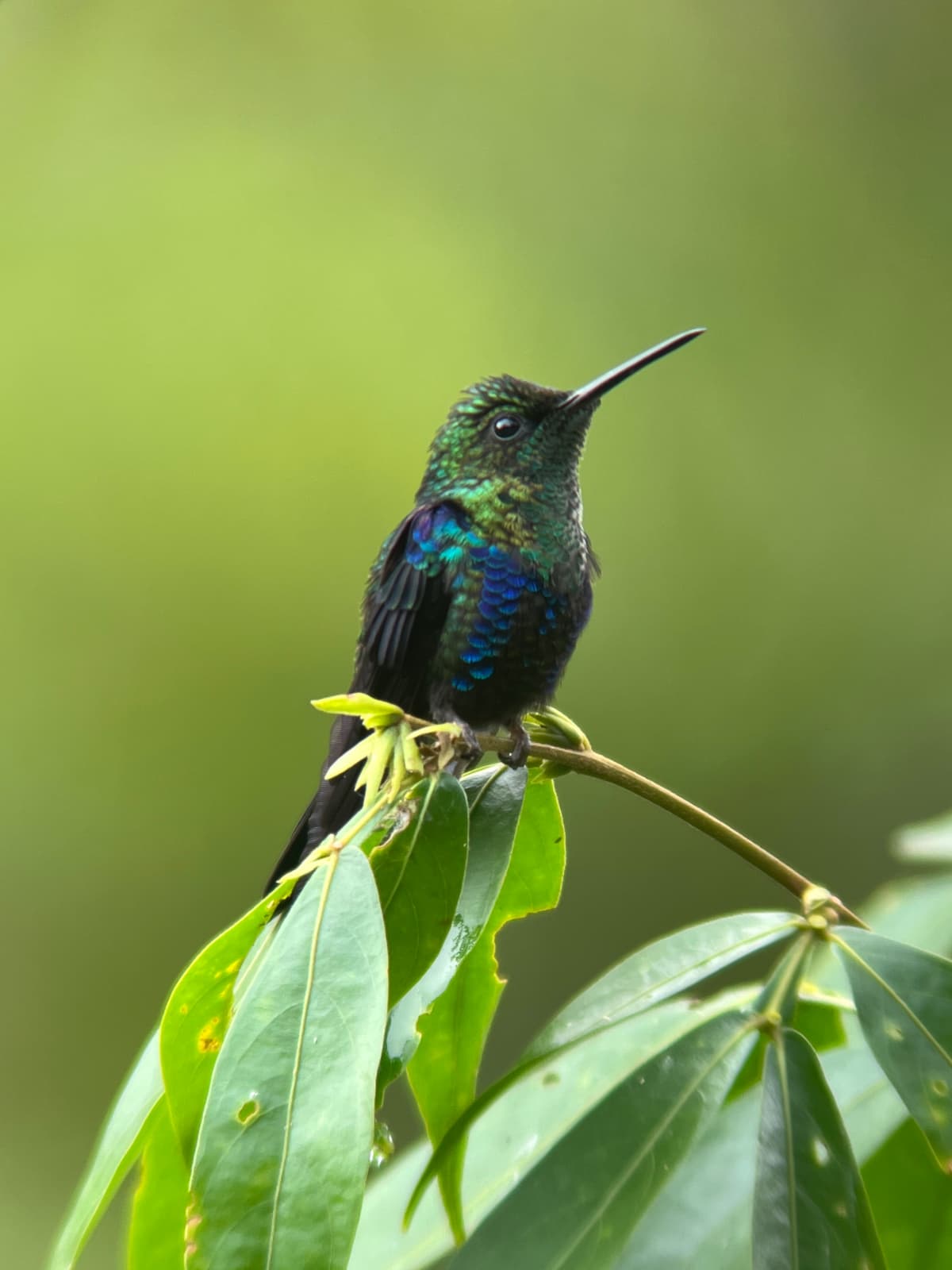
Feeder Garden Favorites
Visitors often hope for species such as Booted Racket-tail, Violet-tailed Sylph, Purple-throated Woodstar, White-necked Jacobin, Brown Inca, and sparkling violetears around active feeder gardens and nearby flowers.
Mindo is one of Ecuador's most rewarding places for hummingbirds, combining cloud forest, flowering gardens, feeders, forest edges, and nearby reserves. Visitors can enjoy close views, photography opportunities, and a strong introduction to the Chocó Andino birding region.
This guide explains where hummingbirds are commonly seen in Mindo, what species visitors may encounter, how feeder gardens and cloud forest trails fit together, and when a private guide helps you turn a relaxed hummingbird visit into a broader birdwatching route.
You can see hummingbirds in Mindo at feeder gardens, flowering lodge gardens, forest edges, and cloud forest routes around town. A private guide helps match your time, mobility, photography goals, and target species with the best current locations while keeping the visit ethical and realistic.
The valley mixes cloud forest habitat, flowers, feeders, and easy access from Quito.
Many gardens and lodges around Mindo use feeders or flowering plants that bring hummingbirds into repeated view, making them easier for beginners and photographers.
Mindo sits within the Chocó Andino, a humid and species-rich region where elevation changes, forest edges, and microhabitats support a wide mix of hummingbirds.
Hummingbirds are colorful, active, and often visible without long hikes, making them a perfect first bird group for families and new birdwatchers.
Repeat visits to feeders and flowers give photographers time to work on shutter speed, backgrounds, perches, and natural behavior without rushing the route.
Sightings vary by season, elevation, weather, and active feeding sites, but these groups are useful planning examples.
Visitors often hope for species such as Booted Racket-tail, Violet-tailed Sylph, Purple-throated Woodstar, White-necked Jacobin, Brown Inca, and sparkling violetears around active feeder gardens and nearby flowers.
Forest edges and trails can add different possibilities, including hummingbirds that move between flowers, canopy gaps, forest understory, and mixed bird activity along the route.
For photography, the best targets are often individuals using predictable perches or flowers. A guide can help choose locations with better light, calmer backgrounds, and more respectful viewing space.
A hummingbird-focused morning can combine naturally with toucans, tanagers, forest edges, or a broader Mindo bird watching guide route.
The best location depends on your goals: relaxed viewing, photography, target species, or a broader birding day.
Best for close views, short visits, beginners, families, and photographers who want repeat activity around perches and flowers.
See feeder guideBest for a more complete birding experience where hummingbirds are part of a wider route with tanagers, toucans, and forest species.
Explore cloud forestBest when you want a guide to adjust the day around current activity, photography needs, target species, timing, and transport.
Plan a private routeBest when hummingbirds are one priority among many and you also want toucans, tanagers, Cock-of-the-Rock, or Chocó specialties.
Compare toursMornings are often calmer and combine well with a wider birding route, but hummingbirds can remain active around feeders and flowers at different times.
Bring binoculars, a charged camera, rain protection, comfortable shoes, water, and a light layer for changing cloud forest weather.
Use fast shutter speeds, watch backgrounds, avoid blocking feeder access, and give birds room to move naturally between perches and flowers.
A private guide is useful when you want species examples, ethical viewing, better timing, local route choices, and help connecting hummingbirds with other birds.
You mainly want a relaxed feeder-garden visit, have limited time, are not chasing specific species, and are comfortable arranging access and transport yourself.
You want species help, photography timing, a broader cloud forest route, a family-friendly pace, or the best chance to combine hummingbirds with toucans, tanagers, and other Mindo birds.
Use these same-language pages to connect hummingbirds with the wider Mindo birding cluster.
Compare guided options and choose the best route for your timing and birding level.
Birds of MindoUnderstand how hummingbirds fit into the broader cloud forest bird community.
Toucans of MindoAdd canopy species and larger target birds to a hummingbird-focused route.
Andean Cock-of-the-RockPlan a stronger full-day target-bird route around Mindo and nearby habitat.
Simple answers for visitors planning hummingbird gardens, photography, and guided birding routes in Mindo.
Common options include feeder gardens, lodge gardens, flowering areas, cloud forest edges, and guided routes near Mindo. The best choice depends on your time, mobility, photography goals, and whether you want a wider birding day.
Species vary by site and season, but visitors often hope for Booted Racket-tail, Violet-tailed Sylph, Purple-throated Woodstar, White-necked Jacobin, Brown Inca, and other cloud forest hummingbirds.
Yes. Feeders, flowering gardens, and repeat perches can create strong photography opportunities, especially with patience, respectful distance, good light, and a route chosen around current activity.
You can enjoy some feeder gardens independently, but a guide helps with species identification, timing, ethical viewing, route choices, and combining hummingbirds with other Mindo birding highlights.
Tell us your dates, available time, birding level, photography goals, and whether hummingbirds are your main target or part of a wider cloud forest birding day.