Hummingbirds
Color, speed, close views, photography practice, and beginner-friendly observation around gardens, feeders, flowers, and edges.
Mindo is known for colorful cloud forest birds. Visitors may see hummingbirds, toucans, aracaris, tanagers, flycatchers, woodpeckers, quetzals, raptors, antpittas, and the Andean Cock-of-the-rock depending on habitat, timing, route, and weather.
In Mindo, the most approachable birds include hummingbirds, toucans, aracaris, tanagers, flycatchers, woodpeckers, and mixed-flock species. With an early start and a good local route, birders may also look for Andean Cock-of-the-rock, quetzals, antpittas, raptors, and other Chocó Andino cloud forest specialties.
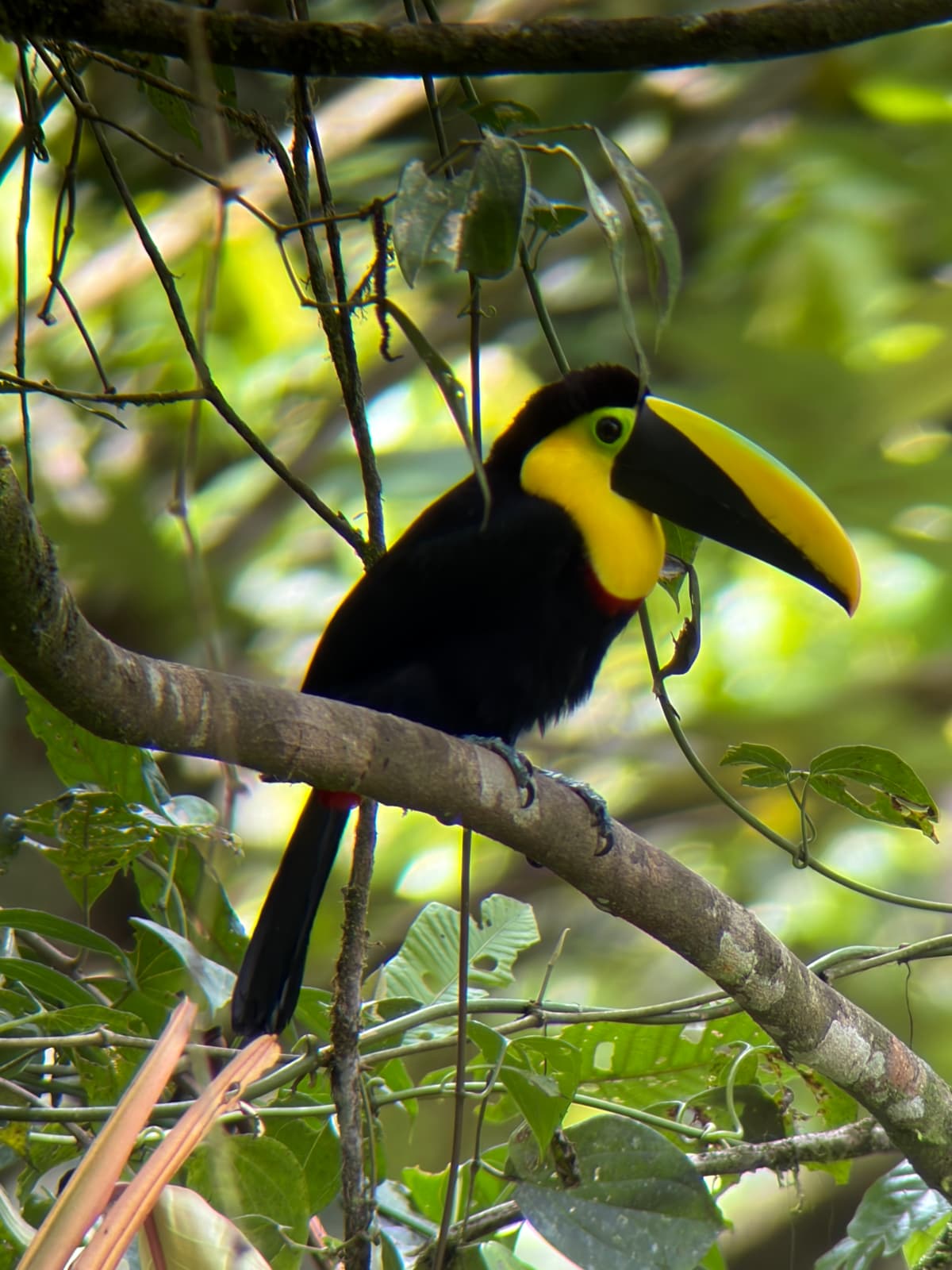
Exact sightings change by route, season, food sources, weather, and time of day.
Often the easiest group for beginners to enjoy, especially around gardens, feeders, flowers, and forest edges.
Look for larger shapes moving across forest edges or fruiting trees. A guide can help separate similar silhouettes and calls.
Colorful tanagers and mixed flocks can move quickly through the canopy, especially during active morning periods.
Use these as practical planning choices, not guarantees of wild sightings.
Color, speed, close views, photography practice, and beginner-friendly observation around gardens, feeders, flowers, and edges.
Large, charismatic birds connected to forest edges, fruiting trees, and guide knowledge for calls, silhouettes, and route timing.
A sought-after regional species that usually rewards early timing, local lek knowledge, quiet access, and a planned route.
Fast-moving color and mixed-flock behavior that becomes easier with patient scanning, good binocular technique, and a slower guided walk.
Mindo has visible birds, but local knowledge helps you understand patterns.
A local guide watches fruiting trees, light, elevation, calls, and recent route activity. That matters because the same trail can feel very different in the early morning, after rain, or when a mixed flock passes through.
Many travelers see colorful birds in Mindo, but a guide helps connect what you see to names, behavior, habitat, and realistic expectations. That is especially useful for families, photographers, and first-time birders.
Continue planning with same-language pages for tours, species, routes, and guide support.
Short answers for planning what birds you may see in Mindo.
You may see hummingbirds, toucans, aracaris, tanagers, quetzals, flycatchers, woodpeckers, antpittas, raptors, and Andean Cock-of-the-rock depending on route and timing.
Early morning is usually best. Weather, fruiting trees, elevation, light, and recent bird activity can change the strongest route.
A guide is not mandatory, but it improves identification, route choice, calls, timing, and chances of finding less obvious species.
Yes. Gardens, feeders, forest edges, and short guided routes can make Mindo rewarding even for first-time birders.
No. Ethical birding avoids guarantees for wild birds, but good planning improves your odds for target groups and habitats.
The best route depends on your dates, target species, elevation, weather, recent activity, and whether photography or general bird diversity matters most.
Tell us your travel dates, target birds, photography goals, and experience level. We will help you choose a realistic route and tour length.