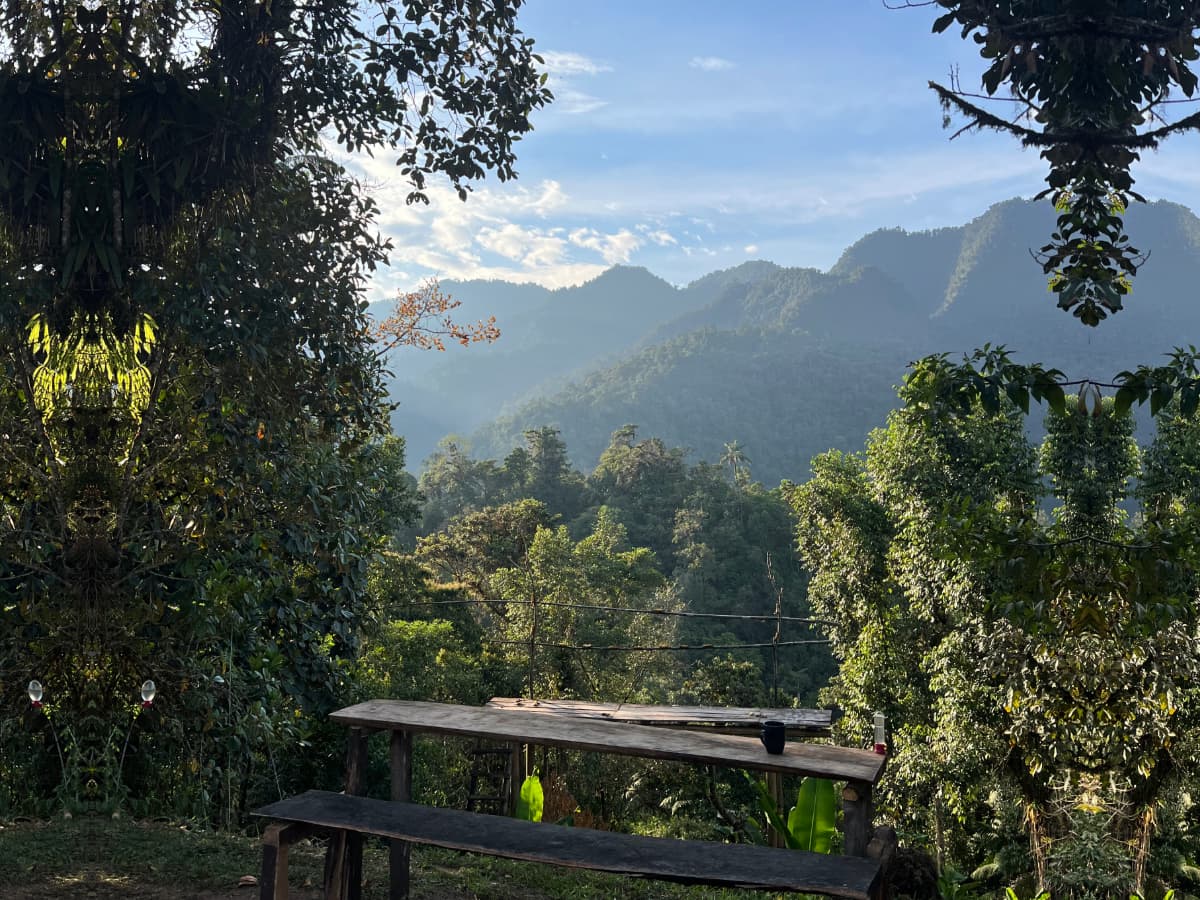
Official MCF range for Milpe Bird Sanctuary.
Lower-elevation Chocó birding
Milpe Bird Sanctuary Birding Guide near Mindo, Ecuador
Milpe Bird Sanctuary is a 247-acre Mindo Cloudforest Foundation reserve in the Chocó-Andes, known for extensive trails, manakin leks, Chocó endemics, toucans, tanagers, hummingbirds and a useful lower-elevation contrast to central Mindo.
1,050–1,150 mChocó endemicsManakin leks
Is Milpe worth adding to a Mindo birding route?
Yes. Milpe is especially valuable when you want to expand beyond central Mindo into lower western-slope forest. Its 1,050–1,150 m elevation, extensive trails, manakin activity and Chocó species give it a distinct bird community, while its proximity makes it practical for a half-day, full-day or combined reserve route.
Quick facts for planning
Created in 2004 and protecting montane evergreen forest.
Official MCF visitor guidance along the Calacalí–E28 corridor.
Manakins, toucans, tanagers, hummingbirds and mixed flocks.
Verified visitor features
Extensive birding trails
Milpe has a broad trail network through montane evergreen forest, useful for mixed flocks, manakins and forest specialists.
Birdwatching gardens and feeders
MCF lists birdwatching gardens as a Milpe amenity, complementing trail birding with repeated activity around the property.
Food, lodging and gift shop
Milpe has a cafe/restaurant, gift shop and overnight lodging options. Confirm current services directly with the reserve.
Travel context from Mindo and Quito
Local birding sources and guide estimates vary. Treat this as a planning range and confirm the pickup point and road conditions.
Mindo Cloudforest Foundation gives this approximate drive time via Calacalí–E28; traffic and road conditions can change it.
Travel times are planning ranges, not guarantees. Confirm the current route, pickup point and road conditions before departure.
Map, official reserve information and reservations
Open Milpe in Google Maps
Use the exact reserve name in Google Maps for current routing and road conditions.
Official Mindo Cloudforest Foundation information
Check current reserve services, visitor information and reservation options directly with MCF.
Who Milpe is best for
Chocó specialty birders
Milpe is a strong stop for western-Andes and Chocó specialties, especially when paired with other elevations.
Bird photographers
Gardens, feeders, manakin activity and forest edges provide varied photography conditions.
Multi-reserve itineraries
Its location works well with Mindo, Rio Silanche, San Tadeo and other western-slope birding sites.
Habitat and elevation
Montane evergreen forest
MCF identifies Milpe as montane evergreen forest with access to the Chalhuayacu River valley and an elevation range of 1,050–1,150 m.
A lower western-slope complement
Compared with higher reserves near Quito and Tandayapa, Milpe gives birders a lower-elevation Chocó-Andean community with different target species.
Birds to look for
Club-winged Manakin
One of Milpe’s signature birds, with famous lek behavior and a distinctive wing-generated sound.
Chocó Toucan
A major Chocó target regularly associated with Milpe and other western-slope forests.
Long-wattled Umbrellabird
An iconic Chocó species listed by MCF among the sanctuary’s important birds, though encounters should never be treated as guaranteed.
Red-headed Barbet
A colorful western-Andes species and useful link between Milpe’s reserve page and the individual species guide.
Pale-mandibled Aracari
A conspicuous canopy species regularly reported at the Milpe eBird hotspot.
Tanagers and hummingbirds
Milpe’s gardens, feeders and forest edges can add many colorful species to a trail-based birding day.

Explore Milpe on eBird
Open the verified Milpe Bird Sanctuary hotspot for recent checklists, reported species and current birding context.
Photography fit
Manakin behavior
Lek activity can create memorable behavior shots, though forest light may demand higher ISO and fast autofocus.
Feeders and gardens
Repeated hummingbird and tanager activity can be useful for portraits and experimenting with shutter speed.
Forest specialists
Toucans, barbets, mixed flocks and canopy birds reward patience and flexible positioning along trails.
How to plan a strong Milpe visit
Start with the trails
Early trail birding can be especially productive for manakins, mixed flocks and forest specialists.
Use gardens as a second layer
Feeders and birdwatching gardens can add color and photography after deeper trail birding.
Combine elevations strategically
Milpe becomes more valuable when your route contrasts it with Rio Silanche, Mindo or higher-elevation reserves.
Guide vs. self-guided
Guided birding
Best for target species, calls, mixed flocks, manakin leks and combining Milpe with another reserve efficiently.
Self-guided visit
Milpe has trails and visitor infrastructure, so independent birders can explore, but a guide usually improves target-bird efficiency.
How to combine Milpe with nearby birding sites
Milpe + Rio Silanche
A classic elevation contrast: Milpe’s montane forest plus lower Chocó lowland species at Rio Silanche.
Milpe + Mindo
A practical route for travelers based in Mindo who want a distinct forest community without a long transfer.
Milpe + San Tadeo
Useful for combining trail birding with feeder-based photography and colorful western-slope species.
Practical planning checklist
- Confirm current entrance/reservation details with MCF before departure.
- Bring cash if paying on site; MCF notes its properties are cash-based for on-site payment.
- Use rain protection, trail footwear, water and insect repellent.
- Start early if manakins and mixed flocks are priority targets.
- Tell your guide whether photography or species count matters more.
- Use eBird recent checklists as context, never as a guarantee.
Related reserve and planning pages
FAQs About Milpe Bird Sanctuary
Is Milpe Bird Sanctuary worth visiting from Mindo?
Yes. Milpe adds lower-elevation Chocó-Andean forest, manakin leks, toucans, tanagers, hummingbirds and extensive trails to a Mindo itinerary. It is especially useful for birders who want a different elevation and habitat from central Mindo.
How far is Milpe Bird Sanctuary from Mindo?
Local birding sources often place Milpe roughly 15–30 minutes from Mindo depending on pickup point and road conditions. Treat that as a practical range, not a guaranteed transfer time.
How far is Milpe Bird Sanctuary from Quito?
Mindo Cloudforest Foundation describes Milpe as about a 1.5-hour drive from Quito along the Calacalí–E28 route. Traffic, pickup location and road conditions can change the actual time.
What birds can you see at Milpe?
Milpe is known for Chocó endemics and western-Andes specialties including Club-winged Manakin, Chocó Toucan, Long-wattled Umbrellabird, Chocó Trogon, Red-headed Barbet, tanagers and hummingbirds. eBird lists hundreds of species for the hotspot, but no individual sighting is guaranteed.
Is Milpe good for bird photography?
Yes. Trails, birdwatching gardens, feeders and repeated activity from manakins, tanagers, hummingbirds and toucans can create strong photography opportunities. Rain, shade and fast-moving birds still favor flexible settings and weather protection.
Do you need a guide at Milpe?
A guide is not the only way to enjoy Milpe, but it is strongly recommended for target birds, calls, mixed flocks, manakin leks and efficient use of limited time. Mindo Cloudforest Foundation also offers guided visits and can arrange transport.
Before confirming your Milpe visit
Before choosing Milpe
Share target birds, date, starting point and mobility needs. We can compare Milpe with other reserves before confirming a route.
Compare reservesCurrent access and conditions
Check opening times, entrance charges, access and current services with the foundation. Trails can be wet; confirm the effort involved in the route you want to take.
Official visitor informationGuided or independent
An independent visit may suit open-ended exploration. Ask about a flexible private route when time, photography or particular birds are the priority.
Plan a private routeNext step
Build Milpe into a private Chocó birding route.
Tell us your dates, target birds, photography goals and whether you want to combine Milpe with Mindo, Rio Silanche or another elevation.
What happens next
- Share your date, pickup point and priority birds.
- We compare Milpe with nearby reserves and elevations.
- You receive a realistic route plan with weather flexibility.