Current daytime entrance fee confirmed by Bellavista.
Upper Tandayapa cloud forest birding
Bellavista Cloud Forest Lodge & Reserve Birding Guide near Mindo, Ecuador
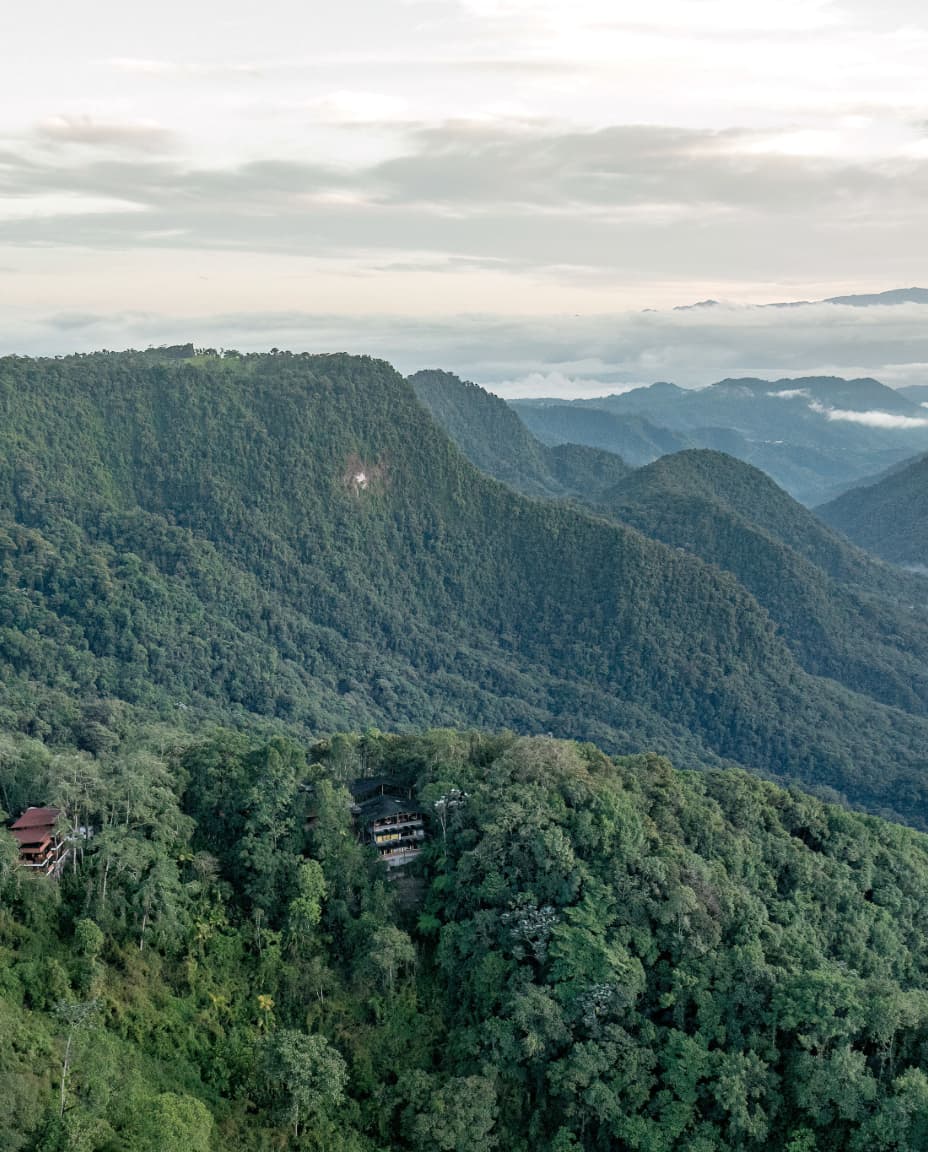
Bellavista Cloud Forest Lodge & Reserve protects about 400 hectares of upper cloud forest in the Tandayapa Valley. The reserve has now confirmed its visitor information directly with Mindo Bird Watching, including access, facilities, birding conditions, signature species and practical visit details.
~2,250 m elevationTandayapa ValleyCloud forest lodge

Is Bellavista worth adding to a Mindo birding route?
Yes. Bellavista gives you a higher, cooler cloud-forest community than many Mindo-area routes, with mountain toucans, hummingbirds, trogons, quetzals and mixed flocks. Its lodge, feeders and trails also make it practical for photography, a full day, or an overnight stop within a broader western-Andes itinerary.
Verified quick facts for planning
Operational details below were supplied directly by Bellavista Cloud Forest Lodge & Reserve in August 2026.
A practical window for feeders, central areas and selected trails.
The main gate and office operate in this window; Bellavista says guests can be received from 6:00 a.m.
Upper Tandayapa cloud forest, cooler than many lower Mindo routes.
A major reason Bellavista stands apart within the Tandayapa corridor.
Bellavista identifies this as a particularly strong early birding window.
Verified visitor information
Reservations
Advance reservation is not required for a normal visit, but Bellavista recommends notice about one day ahead. A Bellavista guide must be reserved in advance.
Independent or guided
Visitors may arrive independently or use a guide. For target birds and efficient use of time, Mindo Bird Watching can build Bellavista into a private route.
Parking and restrooms
Both parking and restrooms are available.
Bird feeders
Yes. Feeders are part of the visitor birding and photography experience.
Photography areas
Bellavista confirmed feeders as the principal dedicated photography feature.
Trail difficulty
Trail options vary from easy to medium and difficult, allowing the visit to be matched to pace and ability.
Beginners and families
Bellavista considers the reserve suitable for beginners and families.
Limited mobility
The central area can work for visitors with limited mobility; more demanding trails are not presented as mobility-accessible.
Plan Bellavista with Mindo Bird Watching
Build Bellavista into a private route based on your target birds, photography goals, pace, weather and available time.
Travel context from Mindo and Quito
Local guide estimate. Confirm the current route, pickup point and road conditions before departure.
Bellavista’s published material gives roughly 1 hour 45 minutes from Quito city or airport; traffic can change this.
Drive times are planning estimates, not guarantees. Weather, traffic, pickup point and road conditions can change the route.
Map and Bellavista trip planning
Verified Google Maps location
Bellavista supplied its exact Google Maps entity link. Use it for current routing and road guidance.
Plan Bellavista with Mindo Bird Watching
We can include Bellavista in a private route from Mindo or Quito and combine it with nearby reserves based on target birds, photography goals, walking preference and available time.
Who Bellavista is best for
Higher-elevation target birders
Bellavista is a logical stop for birders seeking a cooler upper-cloud-forest community above many Mindo routes.
Hummingbird photographers
Feeders, gardens and lodge viewpoints can bring repeated hummingbird activity into more predictable viewing areas.
Travelers combining birding and comfort
The lodge setting makes Bellavista useful for people who want serious birding with meals, lodging and guided options.
Habitat and elevation
Upper montane cloud forest
Bellavista sits high in the Tandayapa Valley within the Chocó Andino Biosphere Reserve, where mist, epiphytes and steep forested slopes shape the bird community.
A useful elevation contrast
Its roughly 2,250 m lodge elevation gives birders a different species mix from lower sites such as Milpe and Rio Silanche.
Signature birds confirmed by Bellavista
These are important Bellavista targets supplied by the reserve. Wild bird sightings are never guaranteed.
Mountain forest specialties
Plate-billed Mountain-Toucan
A signature western-Andes toucan of Bellavista's upper cloud forest.
Crimson-rumped Toucanet
A colorful toucanet confirmed on Bellavista's supplied target list.
Ocellated Tapaculo
A secretive forest-floor specialist and rewarding target for experienced birders.
Quetzals and iconic forest birds
Crested Quetzal
One of Bellavista's confirmed quetzal targets in suitable montane forest.
Golden-headed Quetzal
A classic cloud-forest target associated with fruiting trees and quiet forest.
Andean Cock-of-the-Rock
An iconic Choco-Andean species included in Bellavista's supplied bird list.
Special targets
Giant Antpitta
A high-value forest target that rewards patience and local knowledge.
Moustached Antpitta
A secretive understory species confirmed on Bellavista's bird list.
Black-and-chestnut Eagle
A notable raptor recorded on Bellavista's supplied bird list.
Oilbird
A distinctive nocturnal species included in the reserve's confirmed target list.
Recent Bellavista sightings on eBird

Check the Bellavista Cloud Forest Reserve hotspot
Use eBird hotspot L468896 to review recent checklists, species reported by visiting birders, and seasonal observation patterns before your trip.
Best timing, season and road conditions
Best early window
Bellavista identifies approximately 6:15-6:30 a.m. as a particularly strong time for bird activity. An early arrival is useful when target species are the priority.
January through May
Bellavista reports its best overall activity from January to May. These months are also rainy, so waterproof layers and quick-drying clothing are important.
12 km of gravel access
The approach includes about 12 km of gravel road. Bellavista says it is accessible to all vehicles, but drivers should use caution, especially in frequent rain.
Wildlife beyond the bird list
Bellavista also reports Tyra and Spectacled Bear in the reserve. Olinguito and Kinkajou are associated with night visits. Night access has separate arrangements from the standard daytime entrance, so Mindo Bird Watching should confirm the current plan before building an evening itinerary.
What guests most often ask before visiting
Road condition
Rain and the gravel approach are common planning questions.
Opening and arrival time
Guests often ask when they can arrive, especially for early bird activity.
Activity of target species
Wildlife activity changes naturally, so current conditions matter more than a fixed promise.
Photography fit
Feeders and gardens
Repeated hummingbird activity can support portraits, behavior shots and short high-action sessions near the lodge.
Forest and mixed flocks
Trails can produce toucans, trogons, tanagers and mixed flocks, but low light makes fast autofocus and higher ISO useful.
Mist and atmosphere
Cloud, fog and wet vegetation can create beautiful backgrounds, but camera rain protection is worth carrying.
How to plan a strong Bellavista visit
Start early
Early morning improves your chances for active mixed flocks, vocal birds and target species before cloud and rain intensify.
Use the lodge and feeders strategically
Feeders and lodge viewpoints can complement trail birding rather than replacing it.
Pair elevations
Bellavista works especially well when combined with Mindo, Paz de las Aves, Yanacocha or lower western-slope sites on a multi-day route.
Guide vs. self-guided
Guided birding
Best for target birds, calls, mixed flocks, owls and a more efficient route through Bellavista’s elevation and trail network.
Independent visit
The lodge and trails make self-guided exploration possible, but specialist guiding can improve detection and reduce time lost.
How to combine Bellavista with nearby birding sites
Bellavista + Paz de las Aves
Combine upper Tandayapa cloud forest with antpittas and Andean Cock-of-the-Rock-focused birding.
Bellavista + Yanacocha
A strong high-elevation pairing for hummingbirds and western-Andes target species.
Bellavista + Mindo
Useful for travelers based in Mindo who want a clear elevation change without leaving the northwest Ecuador birding circuit.
Practical planning checklist
- Confirm current Bellavista day-visit or lodging arrangements before departure.
- Bring rain protection, trail footwear and a layer for cooler upper-cloud-forest conditions.
- Carry binoculars and a camera setup suited to low light if photography matters.
- Start early when target birds and mixed flocks are the priority.
- Confirm pickup point and road conditions before relying on any drive-time estimate.
- Treat all bird lists as possibilities, never guarantees.
Related reserve and planning pages
FAQs About Bellavista Cloud Forest Reserve
Is Bellavista Cloud Forest Reserve worth visiting from Mindo?
Yes. Bellavista adds upper-montane cloud forest, hummingbird feeders, mixed flocks, toucans, trogons and quetzals to a Mindo-area itinerary. It is particularly useful when you want a higher-elevation bird community and lodge-based access in the Tandayapa Valley.
How far is Bellavista from Mindo?
Local guide estimates commonly place Bellavista at roughly 45 minutes from Mindo, but the actual drive depends on pickup point, weather and road conditions. Use that as a planning estimate rather than a guaranteed transfer time.
How far is Bellavista from Quito?
Bellavista states that the reserve is less than two hours from Quito. Published Bellavista material also describes about 1 hour 45 minutes from Quito city or airport, with actual timing varying by traffic and pickup point.
What birds can you see at Bellavista?
Bellavista highlights Plate-billed Mountain-Toucan, hummingbirds such as Gorgeted Sunangel, owls, Masked Trogon, quetzals and many other cloud-forest birds. Mixed flocks can also include tanagers, woodcreepers and other western-Andes species. Sightings always vary.
Is Bellavista good for bird photography?
Yes. Feeders, gardens, lodge viewpoints and forest trails can create strong opportunities for hummingbirds, tanagers and cloud-forest birds. Low light, mist and rain are normal challenges, so fast lenses, flexible ISO settings and weather protection are useful.
Do you need a guide at Bellavista?
Bellavista has trails and lodge-based birding that independent visitors can enjoy, but specialist guides are available and are valuable for target birds, calls, mixed flocks, owls and efficient route planning.
Next step
Build Bellavista into a private western-Andes birding route.
Tell us your dates, pickup point, target birds, photography goals and whether you want to combine Bellavista with Mindo, Paz de las Aves, Yanacocha or another elevation.
What happens next
- Share your date, pickup point and priority birds.
- We compare Bellavista with nearby reserves and elevations.
- You receive a realistic route plan with weather flexibility.